


Written by Alice Jukes
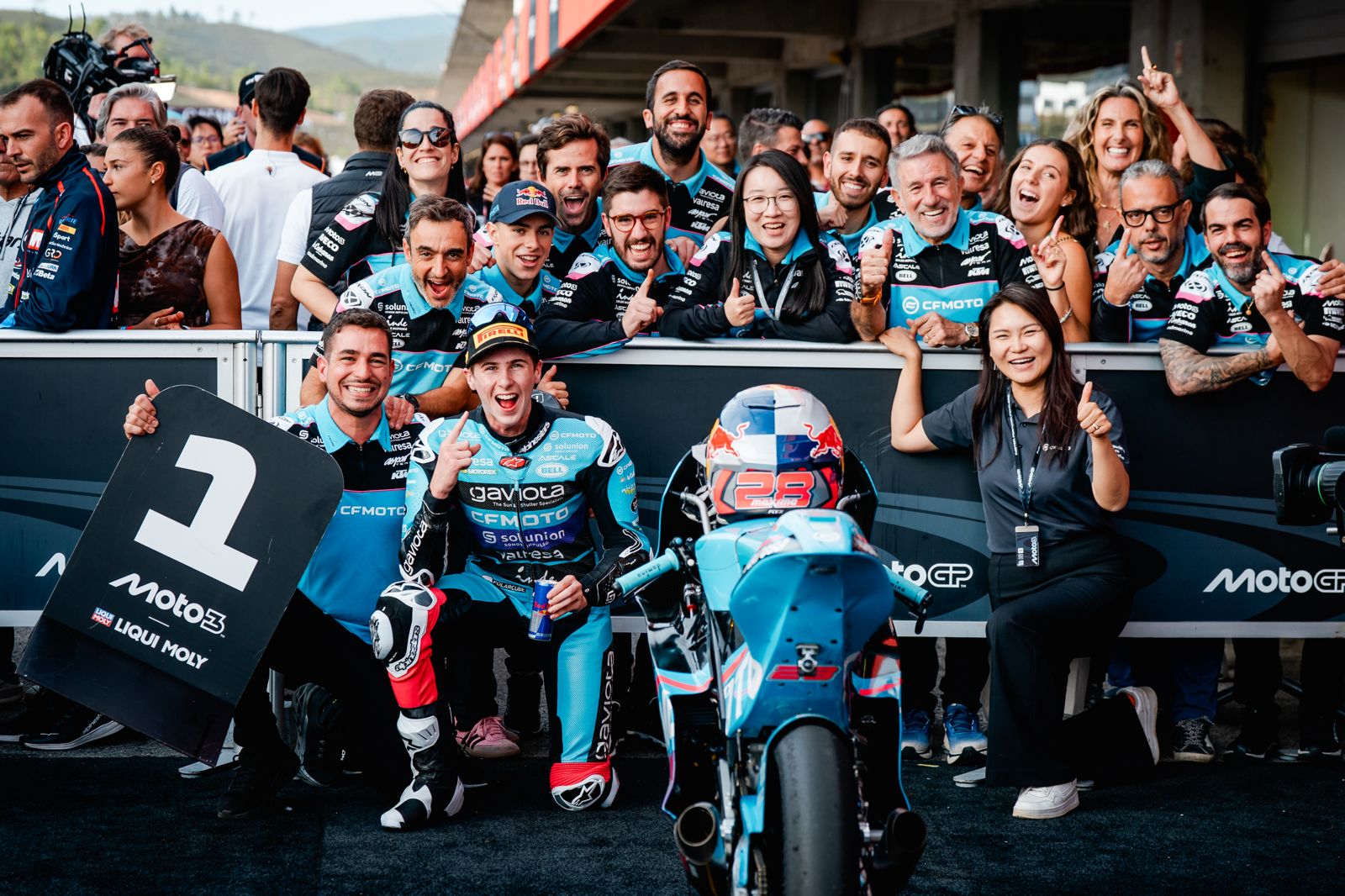
Máximo ‘Killer’ Quiles
It’s no wonder they call him Killer.
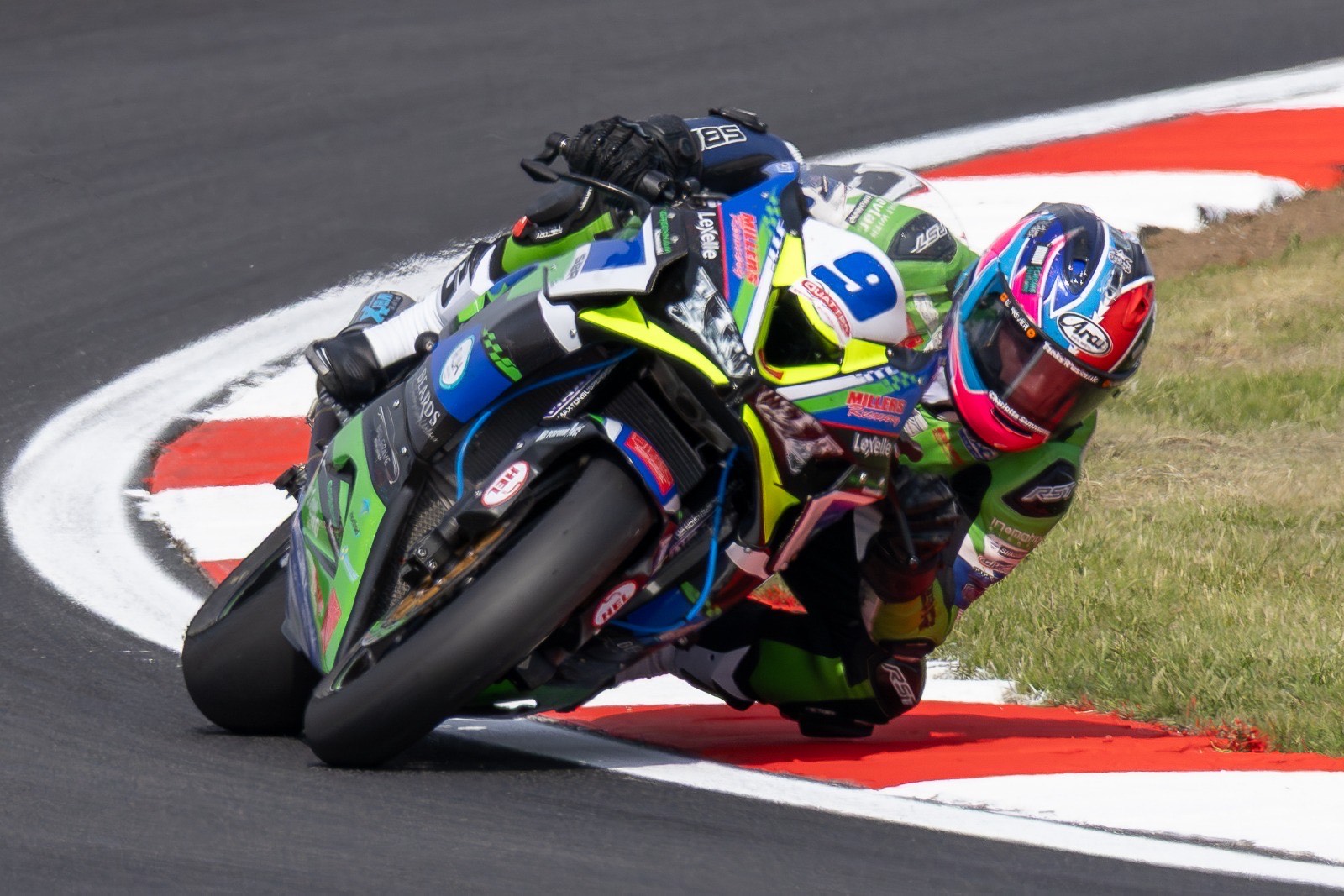
Grand Prix racing has always had a way of turning talent into mythology. Nicknames become shorthand for what words can’t quite capture. El Diablo. The Baby Alien. The Doctor. Names that belong to riders who reshaped the sport in their image. Now, another begins to take his place among them. Máximo Martínez Quiles, Killer, a rider whose focus and instinct make his rise feel less like the arrival of a newcomer and more like the inevitable emergence of MotoGP’s next great talent.
He came into the world championship with two strikes against him: two rounds missed due to the mandatory minimum age, then two more lost to a training injury. A four-race deficit is usually an insurmountable roadblock for any title ambition, enough to kill a championship challenge before it begins. Yet, here we are, following the Phillip Island Grand Prix, and the seventeen-year-old sits third in the standings, just 3 points behind long-time rival Ángel Piqueras.

That statistic is the most brutal statement of intent in the paddock. His rate of conversion is unprecedented for a rider his age: eight podiums, two pole positions, and two wins delivered from just 15 Grand Prix appearances. The championship may already belong to José Antonio Rueda, who clinched the title one round earlier in Indonesia, but Máximo Quiles has ensured that every conversation about the category’s future points to him.
It would be easy to describe Quiles’ style on track. It’s no secret he’s aggressive, explosive and irrefutably fast, but anyone who watches a Moto3 session could tell you the same thing. Instead, I sat down with Máximo at the Phillip Island Grand Prix circuit, to get a glimpse of the young CFMOTO Aspar rider, in his own words.
Modern Classic Motorcycle News - Kindle Edition
Beginnings
Máximo’s passion began just down the road from his home in Murcia. He would later become one of many elite riders to emerge from the region, standing alongside talents like Pedro Acosta, Fermín Aldeguer and fellow Moto3 frontrunner Álvaro Carpe. “When I was four, my dad bought me a minimoto. He brought me to a closed road near my home.” A makeshift track, with circles painted by his father on the asphalt, was where his love for riding first took shape. At just four years old, that passion was already alive. “I was so motivated,” he said. “[I had] already touched my knee [to the ground].” Máximo’s father noticed it too. “[My father] said, he is enjoying, so he put me in a motorcycling school in Cartagena, next to Murcia.”
That childlike wonder would soon be marred by a nasty crash and a broken collarbone when Máximo was only four. “I was a bit scared and I stopped racing”, unsure whether the joy of riding could outweigh the pain of crashing, “sometimes I went, sometimes no. I was not motivated”. For months he teased a return to the bike, occasionally riding but never quite committing, until his father presented him with an ultimatum: “[Do] you want to race or [do] you want to stay home?” Máximo didn’t hesitate. “I said, okay, I want to ride.”

He kept his word. By 2016, Máximo was competing in regional and national championships, finding himself in the Spanish Minimoto Championship. “In 2016, I did my first championship, and I broke [my] collarbone again.” The very thing that once deterred him became the reason to keep going. “This time I wanted to continue [to race].” The following year, an eight-year-old Máximo won his first title. “In 2017 with the minimoto… I won the Spanish Championship… my first championship.” It was the start of a journey that would eventually lead him to the world stage of Grand Prix racing.
Junior Career
Much like Moto2 and Moto3, audiences outside of Spain and Italy know very little surrounding the junior and feeder classes of MotoGP. Officially known as The Road to MotoGP, the sport has carefully built an ecosystem designed to turn potential into professionalism. Don’t be misled by the word junior; these categories are every bit as cutthroat as the queen class. Riders as young as twelve travel across continents, often juggling multiple championships, all chasing the same limited opportunities.
Máximo has climbed nearly every rung of the junior ladder, leaving distinct impressions in each paddock he’s passed through. A champion of Spanish minibikes in 2017, and a runner up in Moto4 the following year, he set the tone early for what would become a rapid and explosive rise through the ranks. He burst into the European Talent Cup (ETC) in 2021, and despite being one of the youngest on the grid, Máximo’s aggression and precision immediately stood out. Accumulating three wins and five podiums, he took the title home in just his rookie season. Whilst certainly impressive, winning the championship at just thirteen years old meant Máximo was left without a new category to climb, not yet fifteen years old as JuniorGP requires. Instead, he stayed in ETC for 2 more seasons, becoming the first and only double champion in the class’s history in 2023; “I won [ETC] two times. So, I was the first one to do it.”
Máximo joined the Red Bull Rookies Cup in parallel with the ETC in 2022, completing the three-season maximum allowed in the class. The series is a shark pit, running alongside certain rounds in the MotoGP calendar and placing young riders under the same spotlight as the world’s elite. It is often the final filter in the Road to MotoGP system, with riders plucked directly from the Rookies tent and placed in Moto3 seats. With identical KTM machinery and no fixed teams, riders instead working under championship-appointed coaches, and races broadcast worldwide, there are no excuses and nowhere to hide. For Máximo, the transition wasn’t so much about learning speed as it was learning to be consistent; turning raw pace into something repeatable and sustainable.

Few people know these ranks and young riders better than Matt Dunn, commentator for the Red Bull Rookies Cup, he’s watched this young generation grow up, season after season. When I spoke to him at the Phillip Island Grand Prix, he put in perspective the intensity of the era they represent, coining what he calls the Big Spanish 5: José Antonio Rueda, Ángel Piqueras, Máximo Quiles, Álvaro Carpe and Brian Uriarte. These boys have grown up racing each other, sharing the same paddocks and pushing each other to find the smallest advantage. “They are all excellent”, Dunn says, “and every one of them thinks they can beat the other”. With the exception of Uriarte, who steps up to the world championship in 2026 with KTM Ajo, the remaining four have all stood on the front row and podium steps of Moto3 throughout 2025; hardly surprising for those who have followed their development. Yet, amid this golden generation of Spanish talent, Máximo’s raw ability and speed seems to be rising him above the generation he’s helped to define.
That rise, however, hasn’t come without turbulence. These pressure-cooker environments breed both brilliance and volatility. Throughout his career Máximo was fast, often breathtakingly so, but mercurial. That volatility reached its height at Mugello in 2024, during race 2 of the Red Bull Rookies Cup, when a misjudged move on rival Ruche Moodley resulted in a heavy collision and a two-race ban. The incident drew significant criticism within the paddock and marked the first real test of his reputation. For the first time, discussions about Quiles extended beyond speed and potential, to questions of judgement and temperament.
“I was starting to think he was going to be a classic case of amazing talent, but totally the wrong attitude” Dunn admitted. Time in the Rookies Cup revealed a rider learning to manage the same fire that made him so fast. Máximo’s story became as much about tempering intensity as it was about achieving results. Two third-place finishes in the championship in 2022 and 2023 were irreflective of Máximo’s raw pace, rather seasons marked by crashes, penalties and the growing pains of a teenager still learning restraint.
In 2024, Máximo completed his final season of Rookies Cup, whilst simultaneously competing in his rookie season of JuniorGP. Balancing two championships is no feeble task; both demand different versions of the same rider. JuniorGP, with its Moto3-spec motorcycles and longer, more strategic races, place weight on physical prowess to match the larger machinery. The Rookies Cup by contrast placed intense pressure and scrutiny on Máximo’s shoulders. As a veteran of the class, he was pinned as the favourite to break-through for a title-stealing season. To succeed in both required constant evolution, and for Máximo a shift in mindset and maturity.
“He totally proved me wrong” Dunn said, reflecting on the transformation he witnessed across the season. “I think last year humbled him. He didn’t get the results he wanted.” That humility was hard-earned. Under the weight of expectation, one weekend changed everything. “First year [of Red Bull Rookies], I did P3, and second [year] as well, P3. And then the third, I had this crash in Misano,” Máximo recalls. “I had to [get a] top three [finish]and I didn’t. So, it was a difficult moment.” The fall not only ended his title hopes but also cost him the chance to move directly into Moto3 under the exemption rule that allows riders under eighteen to advance if they finish in the top three. “I didn’t have space to go to the world championship, and I didn’t have teams,” he explained. “So, this was very difficult for me.”
For the first time, the path ahead wasn’t clear. With no team and no available seat, Máximo faced the possibility of his progress stalling just as his momentum was beginning to build. Then came a rule change that altered everything. The FIM announced that riders finishing inside the top three in JuniorGP would now be eligible to move directly into Moto3, provided they turned seventeen during the season. For Quiles, it was a second chance. “This saved me a bit,” he said, “I think I showed that I’m ready for the world championship.”
Moto3
The challenge of a class like Moto3 is impossible to measure. Far from just a rookie training ground, it is a rider’s first true introduction to global Grand Prix racing. The series’ intercontinental calendar demands unwavering adaptability as riders face new rivals, tracks, and pressures almost every weekend. One round might mean racing in the suffocating humidity of Asia, the next in the cool winds of Europe. The calendar becomes an exercise in endurance as much as performance, forcing riders to adjust mentally and physically to a constant wave of challenges.

For Máximo, the difficulty was never in believing he could be fast enough. When I asked if he expected to be fighting near the top of the standings in his first year, his answer said everything. “I knew I could do it because I have to believe in myself, but for sure I knew it was going to be difficult. [There are] many people with a lot of experience here in this championship.” He pointed to his rival José Antonio Rueda, already in his third season and widely regarded as one of the most complete riders in the class. The fact that Maximo, only in his rookie year and after missing four rounds, was still fighting for the championship deep into the final stretch speaks for itself, “It was really nice to fight for the championship until the last four rounds because it’s not easy”.
If you trace back to the beginning of the season, Máximo’s ambitions were modest; or perhaps just measured. [My] expectations were a bit different. I didn’t want to focus on the championship. It’s my rookie season, so I just wanted to enjoy and learn with the bike”. In a class as unforgiving as Moto3, that in itself was a mature approach. “At least one of the biggest objectives was to enjoy, learn new tracks and learn the team because we didn’t have a lot of time. And that’s what I’m [doing], and it’s going really good”.
After missing the opening two rounds due to the minimum age limit, Máximo made his world championship debut in Austin, at the Circuit of the Americas, one of the many non-European circuits Máximo had not yet tackled. If qualifying on the front row on his debut wasn’t enough, he finished the race with a top five result, immediately stamping his name as one to watch. An unfortunate accident during training side-lined him for a further two rounds in Qatar and Jerez; “then suddenly, again, the injury,” he said. “I was like, come on, I already missed two. I don’t want to miss more”.
Rather than sit at home and sulk, Máximo took the opportunity to reframe his mindset, “I said, okay, now I don’t have to think about [the] results because I have much less time with the bike than the others”, going so far as to say “it made me stronger”. It’s this kind of mental strength that Dunn credits Máximo’s success to in the Moto3 class, “this year, he seems completely sound, from the very first moment, he was calm”.
Vertical
If Máximo Quiles is the Teen Titan, as I’ve so aptly named him, then his mentor is the juggernaut of MotoGP; a nine-times world champion and one of the most dominating forces the sport has ever seen, Marc Marquez. To grow up under Marquez’s watch is to live with the weight of expectation and the rare privilege of the proximity to greatness, but for Máximo, that connection has always been more motivating than intimidating. “It was not like pressure for me,” he said. “It was like a pressure, but something positive, because if Marc saw something in me, I think it’s because he saw something special. This motivates me. He doesn’t tell me, ‘You have to win, you have to win.’ He just says to enjoy; so, it’s a good kind of pressure.”
The relationship first began in Mugello, during Máximo’s first year in the Red Bull Rookies Cup. After winning Race 1 but crashing out in Race 2, he was left furious with himself, “I was so disappointed,” he recalled. “I was going to the tent on a scooter, and Marc saw me and stopped me. He said, ‘Hey, don’t be worried. When you win, you don’t learn so much. But when you crash and make errors, that’s when you learn.’” Later that season, after Máximo won in Valencia, Marc reached out to his father. “He called my dad and said he wanted to talk. My dad didn’t know if it was real or not. He said, ‘We’ve been watching your kid for a long time, and we’re interested in helping.’” Máximo still remembers the disbelief of that day. “I said, come on, I just won the race, I was top three in my first Rookies season, and now Marc called me. It was so nice.”
Since then, Máximo has not only been under the mentorship of Marc Marquez, but officially signed to the Marquez brothers’ management company, Vertical Group, co-founded with Alex Marquez, a double world champion of the junior classes and second in the 2025 MotoGP standings. Under their guidance, Máximo has become the sole rider in a company otherwise built for models and influencers; a rare exception that speaks volumes about how highly the brothers regard his potential.
Máximo continued to prove that his potential had merit with a statement trifecta: a pole position, podium and victory, all within the opening half of his rookie Moto3 season. For most riders, those three milestones would take years to collect. To make matters even more unbelievable, he did so in the exact same sequence as Marc Márquez had done in 2008 during his time in the Moto3 class, previously titled the ‘125cc class’. I only had to mention Mugello before Máximo leaned forward, ready to tell the story himself. “Yeah, the same as Marc. Marc did it as well,” he said. “My first pole in Le Mans, like Marc. Then the podium in Silverstone, [Marc] was in England too. And the first win was in Mugello. So, when I arrived, I said, ‘I have to win this.’”
By the time he reached Mugello, that coincidence had started to feel like destiny. It was no longer just another weekend; it was a chance to finish what he had unknowingly begun. “I had a lot of pressure because I did the pole and the podium,” he said. “I told myself I had to finish it like him. I was really nervous. Then I talked with him on his track. He said, ‘Come on, now you have to win,’ obviously joking. But I was focused. I knew Mugello was a good track for me.”
That weekend, everything came together. “In the first session I went to learn the track with the Moto3 bike, and I felt really good,” he recalled. “Then in the race, it was the last lap. I overtook my teammate and just tried to be as fast as possible on the exit. It was so close, but I won. So, it was really special.”

CFMOTO Aspar
If there’s a team in Moto3 that embodies heritage and excellence, it’s CFMOTO Aspar. Under Jorge Martínez’s leadership, the CFMoto Aspar Team has built a reputation as one of the most successful and professional environments in the paddock. With a history of generational talents climbing the ranks in Aspar colours, from Nicky Hayden to Francesco Bagnaia, and more recently David Alonso, Máximo knew this was the place to launch his grand prix racing career.
For Máximo, joining them was more than just a career step; it was a reunion. “Yeah, I [rode for] Aspar in the Talent Cup,” he said. “My last year [in ETC], I won with them, and I was really happy”. After his crash in Misano and the uncertainty that followed, it was Aspar who called. “When it was a difficult time, they said, ‘We believe in you, Máximo, and we want you,’” he recalled. “I said, OK, for sure, because I was really happy with them in the Talent Cup. And I knew they were going to be a family, and this is what it is. So, it was so nice to join them in the world championship.”
Looking to the Future
For all the talk of talent and potential, there is a side of Máximo that makes him human. Behind the sharp race craft and the impressive statistics is a 17-year-old still learning how to steady his hands before the lights go out. “Yeah, always,” he said when I asked if he still got nervous. “I always have these nerves. And when I have these nerves, I like it, because I know I’m going to do good. The day I don’t have nerves is when something is wrong.”
It’s rare to hear a rider speak about nerves with such candour, rarer still to hear one embrace them. “Sometimes I pressure myself too much,” he admitted. “I want to always do podiums. I want to win. But it’s not bad for me, because I have this motivation. I tell myself, come on, try to go for the podium. I make small objectives, top five, podium, and it gives me adrenaline. What if I don’t do it? But I say, you have to try”. What’s so truly endearing about Máximo is not his ability on the bike, but the courage to admit that greatness doesn’t come from being fearless, but from learning how to live with the fear.
Admittedly, it’s strange interviewing someone the same age as you about a world that feels so far removed from your own. My intention with this piece isn’t to put Máximo on a pedestal or mythologise him, but to humanise him. I have zero doubt his Grand Prix career will be illustrious, and that one day his name will stand alongside the legends of the sport, but what I loved most about Máximo was his heart and drive. He comes across as an open book: a rider wise beyond his years in professionalism, yet still grounded by that teenage wit that makes him magnetic.
My best example of that came when I asked what he sees in his future. I’ll let his words do the talking:
“For sure, next year, try to go for the championship. It’s pressure, but it’s something normal. If people are saying you can fight for the championship, it means something good. I want people to remember me, you know, like Marc, to win a lot of titles. That’s one of my objectives. Not only one, but many times.”
Naturally, I had to ask: more than Marc?
“Well, more than Marc is difficult. He’s making it really difficult. I’m going to tell him next time, come on, relax a bit! But yeah, I think I can be like him. Better? I don’t know. But for sure, I’ll work hard every day and focus on myself to try to be the greatest of all time.”
If there’s one thing I took from speaking with Máximo, it’s that belief isn’t arrogance when it’s earned.
Written by Alice Jukes : @alic_prj @shift_the_gears
Article written in collaboration with Slicks Magazine : www.slicksmag.com